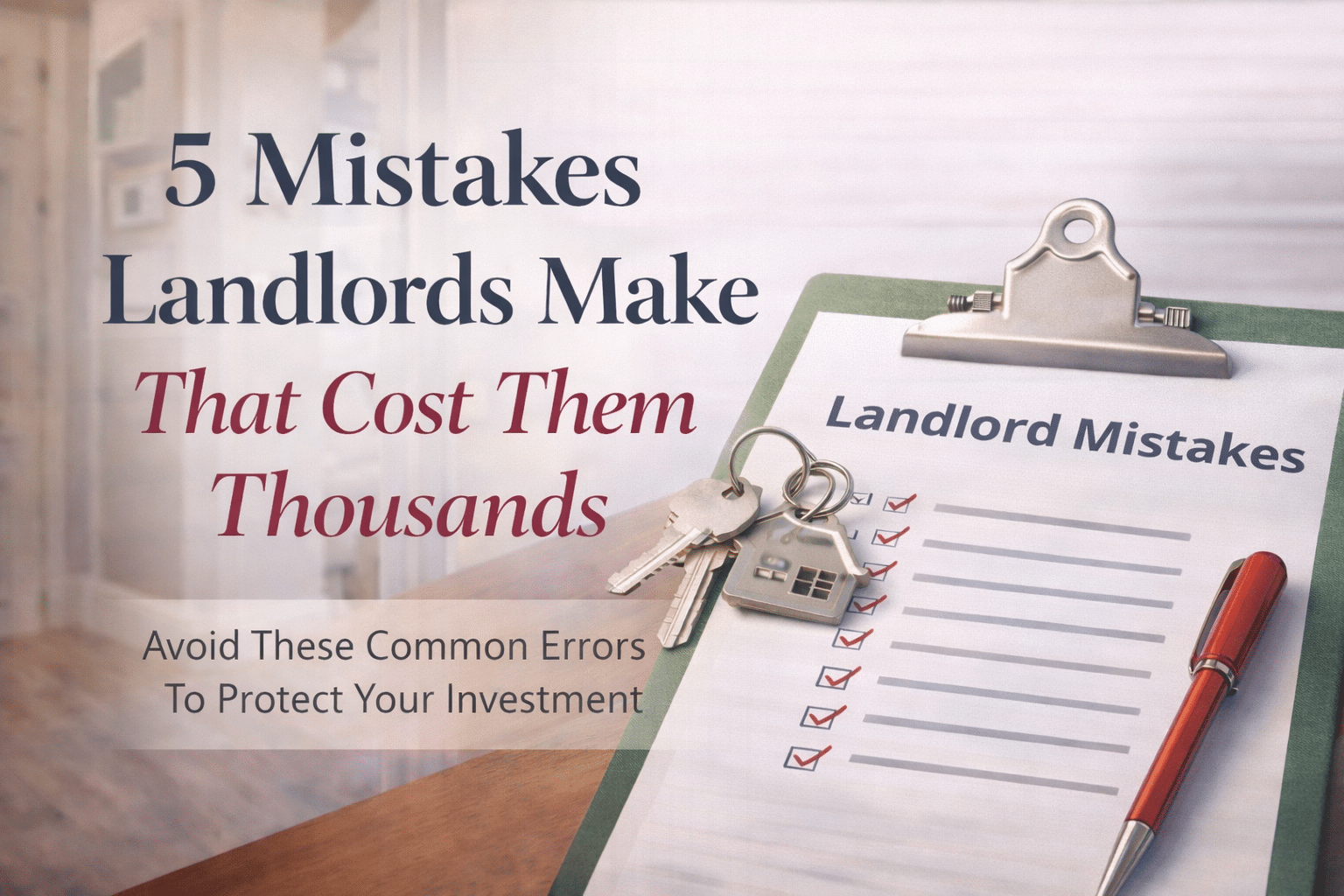
5 Mistakes Landlords Make That Cost Them Thousands
Owning rental property can be a powerful way to build long-term wealth. However, many landlords unknowingly make decisions that reduce profitability, create unnecessary stress, and increase financial risk.
Successful property ownership is not just about collecting rent — it requires systems, planning, and strategic management. Avoiding a few common mistakes can significantly improve the performance of a rental property.
Below are five mistakes landlords frequently make and how they can be avoided.
1. Poor Tenant Screening
One of the most expensive mistakes a landlord can make is placing the wrong tenant.
Skipping background checks or rushing the screening process may lead to issues such as:
- Late or missed rent payments
- Property damage
- Lease violations
- Costly eviction procedures
A thorough screening process should include credit checks, rental history verification, income confirmation, and reference checks. Taking the time to properly evaluate applicants greatly reduces future risks.
2. Underpricing or Overpricing the Rent
Setting the correct rental price is critical.
If rent is set too high, the property may sit vacant for extended periods. If it is set too low, the landlord loses potential income over time.
Determining the correct rental price requires analyzing:
- Comparable rental properties in the area
- Current market demand
- Property condition and amenities
- Neighborhood trends
Strategic pricing helps attract qualified tenants while maximizing rental income.
3. Ignoring Preventative Maintenance
Some landlords delay maintenance until problems become urgent. Unfortunately, this approach usually leads to higher repair costs.
For example:
A small plumbing leak can eventually cause structural water damage.
A neglected HVAC system may require full replacement instead of a simple service.
Regular inspections and preventative maintenance help protect the property and reduce emergency repair costs.
4. Weak Lease Agreements
A vague or poorly written lease agreement can create confusion and disputes between landlords and tenants.
A strong lease should clearly outline:
- Rent payment policies
- Maintenance responsibilities
- Pet policies
- Late fee structures
- Property use guidelines
Clear expectations reduce misunderstandings and protect both parties.
5. Managing Emotionally Instead of Professionally
Rental properties should be managed like a business. Emotional decision-making can lead to inconsistent policies, poor enforcement of lease terms, and unnecessary financial loss.
Professional management requires:
- Consistent communication
- Clear documentation
- Structured policies
- Legal compliance with local regulations
Approaching property management with professionalism helps protect both the landlord and the investment.
Rental properties can provide reliable long-term income when managed correctly. Avoiding common mistakes such as poor tenant screening, incorrect pricing, deferred maintenance, weak lease agreements, and emotional decision-making can significantly improve the success of a rental property.
Landlords who focus on structure, consistency, and proactive management are far more likely to experience stable income, satisfied tenants, and long-term property value growth.