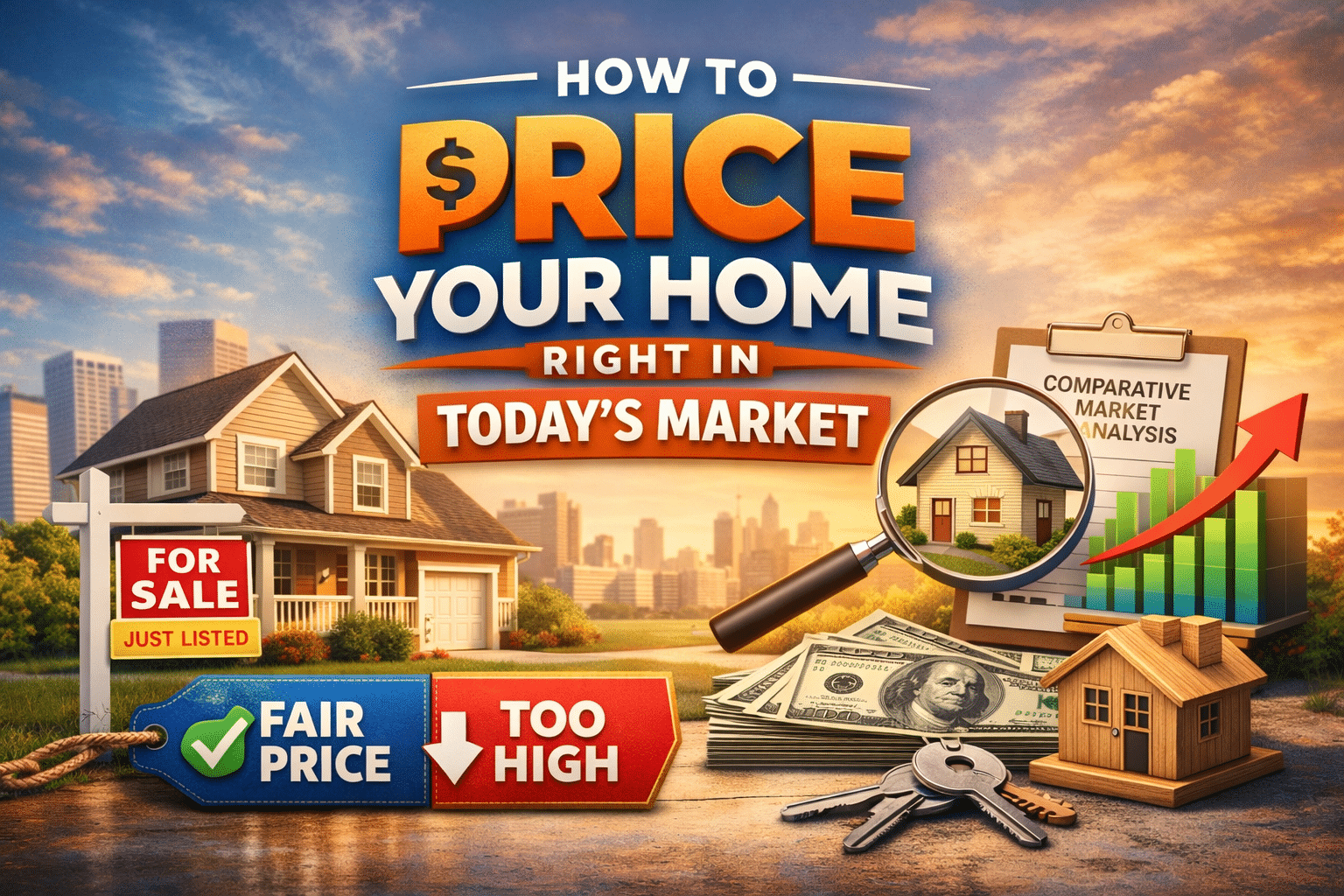
How to Price Your Home Right in Today’s Market
Pricing your home correctly is the single most important decision you’ll make when selling. In today’s shifting real estate market, buyers are informed, cautious, and quick to compare listings. If your price is too high, your home may sit. If it’s too low, you leave money on the table.
So how do you find the sweet spot?
Let’s break it down.
Why Pricing Matters More Than Ever
In a competitive and data-driven market, buyers have instant access to comparable properties, neighborhood trends, and price history. The first 2–3 weeks your home is listed are critical — this is when it gets the most attention online and in showings.
A well-priced home:
- Attracts serious buyers quickly
- Generates stronger offers
- Reduces time on market
- Prevents price reductions later
- Creates competitive bidding in the right conditions
Overpricing often leads to:
- Fewer showings
- Stale listings
- Multiple price drops
- Buyers assume something is wrong
Study Comparable Sales (Comps)
The best way to determine value is by reviewing recently sold homes in your area.
Look for properties that:
- Sold within the last 3–6 months
- Are similar in size, layout, and condition
- Are located in the same neighborhood or nearby
- Have comparable upgrades and features
Active listings are your competition — but sold homes determine market value.
Understand Current Market Conditions
Are you in a buyer’s market or a seller’s market?
- Seller’s Market: Low inventory, high demand → Homes may sell above asking.
- Buyer’s Market: High inventory, cautious buyers → Competitive pricing is crucial.
- Balanced Market: Strategic pricing is key to standing out.
Interest rates, local inventory, and economic trends also influence buyer behavior.
Evaluate Your Home’s Unique Value
Every property is different.
Ask yourself:
- Has the kitchen or bathroom been renovated?
- Is the roof, HVAC, or major system updated?
- Does the home have curb appeal?
- Is it move-in ready?
- Are there HOA fees or special assessments?
Improvements and maintenance matter — but not all upgrades return dollar-for-dollar value. Pricing should reflect the condition realistically.
Avoid Emotional Pricing
Your home holds memories — but buyers look at numbers.
Many sellers overprice because:
- They “need” a certain amount
- They spent heavily on renovations
- They love the home’s sentimental value
The market determines price — not personal attachment.
Price Strategically (Not Just High)
Some sellers think they can “test the market” with a high price and reduce it later. This can backfire.
Homes priced correctly from the start often:
- Receive stronger interest
- Sell faster
- Get better negotiation leverage
- Avoid stigma of price reductions
A slightly competitive price can even spark multiple offers.
First Impressions Are Digital
Over 90% of buyers start their search online.
That means:
- Professional photos matter
- Accurate listing descriptions matter
- Clear pricing strategy matters
If buyers scroll past your listing because it’s overpriced compared to similar homes, you lose momentum.
Price It Right, Sell It Smart
The right price creates urgency. The wrong price creates hesitation.
Selling your home is about strategy, data, and positioning — not guesswork. When your home is priced correctly from day one, you maximize exposure and attract the right buyers faster.
If you’re thinking about selling, the first step isn’t listing — it’s pricing smart.