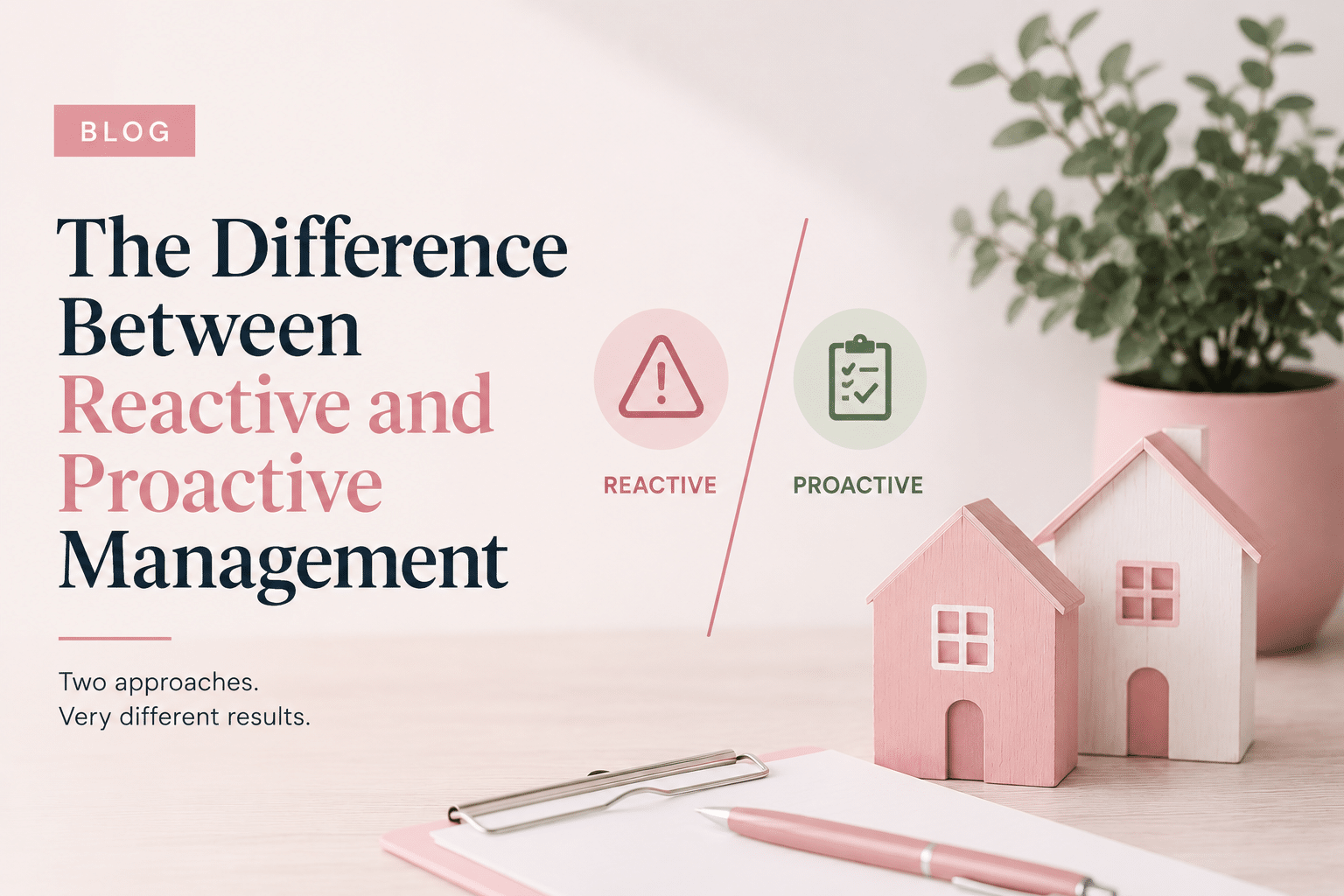
The Difference Between Reactive and Proactive Management
When it comes to property management, there are generally two approaches: reactive management and proactive management.
Both involve maintaining properties and supporting tenants, but the way they handle challenges can be very different. Understanding the difference can help property owners protect their investments, reduce stress, and create better experiences for residents.
What Is Reactive Management?
Reactive management means responding to issues after they happen.
For example, a property manager may wait until a tenant reports a leak before taking action. Repairs are handled when problems arise, and decisions are often made in response to immediate situations.
While this approach can solve problems, it may also lead to higher costs, unexpected emergencies, and increased frustration for both tenants and property owners.
What Is Proactive Management?
Proactive management focuses on preventing problems before they occur.
Instead of waiting for issues to appear, proactive property managers conduct routine inspections, schedule preventative maintenance, communicate regularly with tenants, and monitor the overall condition of the property.
The goal is to identify potential concerns early and address them before they become larger and more expensive problems.
Why Proactive Management Matters
Small issues rarely stay small.
A minor plumbing concern can become water damage. An overlooked HVAC issue can turn into a costly repair. A simple maintenance request can grow into tenant dissatisfaction if not addressed promptly.
Proactive management helps reduce these risks by staying ahead of potential problems.
Better Experiences for Tenants
Tenants appreciate living in a well-managed property.
When maintenance is handled quickly, communication is clear, and issues are addressed before they affect daily life, residents feel more comfortable and valued.
A positive experience often leads to longer tenancies and stronger tenant relationships.
Protecting Property Value
Regular inspections, preventative maintenance, and consistent property care help preserve the value of a home.
Properties that receive ongoing attention often experience fewer major repairs and maintain their appearance and functionality for years to come.
Proactive management protects both the property and the owner’s investment.
Final Thoughts
Reactive management focuses on fixing problems after they occur. Proactive management focuses on preventing them whenever possible.
While no property can avoid every challenge, staying ahead of maintenance, communication, and property care can make a significant difference.
In the long run, proactive management often leads to lower costs, happier tenants, and better property performance.